best sunbed

By using this site you agree to the use of cookies.The Best Indoor Tanning Lotions – We found them for you It is important to prevent UV over exposure and to protect the health of your skin whilst tanning. The tanning guidelines below will ensure you achieve the optimum results as well as ensuring you do not overexpose yourself when tanning: As a rule, we advise new customers to follow the skin type advisory to determine how long they should use our tanning equipment for. To find out your skin type, you can complete our online skin analysis test.Sunbeds give out harmful ultraviolet (UV) rays that damage your skin and can make it look wrinkled, older or leathery. The UV rays from sunbeds can also damage the DNA in your skin cells, and over time this damage can build up to cause skin cancer. Sunbeds can sometimes be marketed as a ‘controlled way’ of getting a ‘safer tan’. But actually, sunbeds are no safer than exposure to the sun itself, and the amount of UV people receive varies enormously too.

IARC (International Agency for Research on Cancer) agrees there is sufficient evidence to show that using sunbeds causes malignant melanoma, the most serious form of skin cancer. They also state that sunbeds provide no positive health benefits. And using a sunbed before you go on holiday doesn’t protect against further damage from the sun while you’re away. Skin Beauty Tips For Summer Sun | You can't always see the damage that UV rays do straight away as it builds up gradually. But every time you use a sunbed you are damaging your skin, making it look worse in the long run. Using sunbeds for the first time before the age of 35 increases the risk of developing melanoma skin cancer by nearly 60%. Surgical treatment for skin cancer can result in serious scarring, and melanoma can be fatal. No matter how much UV you receive, there comes a point when your skin won't get any darker. Using sunbeds can make your skin coarse, leathery and wrinkled. Trying to increase a tan by having more sunbed sessions or using a sunbed after sunbathing does even more damage to your skin.

Sunbeds are not a 'safe' alternative to sun tanning. The main cause of skin cancer is overexposure to UV radiation. Like the sun, sunbeds give off UVA and UVB rays. While sunburn is mostly caused by UVB, both types of UV can cause DNA damage and lead to skin cancer. Modern sunbeds emit mostly UVA rays, but UVB rays can make up anywhere from 0.5-4% of their total output.
mattress sale in austin texasThese emissions can be comparable to the midday sun.
mattress for sale minnesotaAnd the amount of UVA given off can be 10-15 times higher than the midday sun.
best xl twin mattress topper Using sunscreen or limiting your time on a sunbed will not completely protect your skin from damage and ageing.
mattress for less virginia beach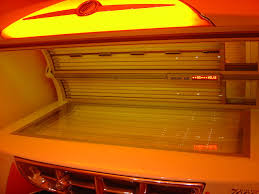
In fact, short periods of intense, irregular UV exposure, like you get on a sunbed, damage your skin. At most, a sunbed tan is the equivalent to a sunscreen with SPF of just 2-4. Not enough to keep you safe in the sun. Burning or going red under a sunbed is a sign that you have seriously harmed your skin.
best organic non toxic crib mattressUV can penetrate deep into the skin's layers and damage the DNA in our skin cells.
memory foam mattress topper cool gelSome of the damage may happen before you get burnt or your skin goes red. Cells damaged by UV are at greater risk of mutating and then dividing uncontrollably, which is what happens in cancer. Vitamin D is important for healthy bones. Our bodies make the vitamin when our skin is exposed to UV rays and it is also present in certain foods.

In general, people only need short exposures to the sun to produce adequate amounts. So you don’t need a sunbed to get your vitamins. Read more about vitamin D. The Sunbeds (Regulation) Act came into force in Scotland in 2009, England and Wales in 2011, and Northern Ireland in May 2012. Combining extreme power and stunning good looks, the iXtreme range of sunbeds outperform everything in their class. Designed following extensive consultation with salon owners and industry specialists, these tanning units offer the highest quality in design and reliability, with clever new technologies and unique features such as changeable LED decorative lighting. Choose from our powerful 200watt vertical, or our new 160watt compact model. Both options feature 50 body lamps and highly efficient ballasts, to ensure impressive performance and outstanding tanning results. The high performance tanning lamps are arranged to hug the body for improved tanning results. Changeable LED lighting allows for personalisation to suit your salon décor.
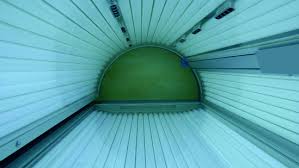
The mirrored base plate has been developed with our unique Scratch Protection Technology. The external skins are made from unbreakable Perspex, making the unit extremely durable. Highly efficient ballasts result in a reduced energy requirement, while delivering an impressive 200watts of tanning power. The integrated stereo speaker system provides for an enjoyable and relaxing tanning experience. A big capacity ventilation system keeps the client comfortable and ensures maximum lamp output efficiency. For more information on the iXtreme range, please contact your local dealer:Question: Can I use sunscreen in a tanning bed to make it safer?I am going on a cruise in a few weeks and would like to establish a base tan. I was wondering if it would be safe to go in a tanning bed as long as I wear an SPF 50 sunscreen. I don't have time to tan outdoors and I am really scared of getting a bad sunburn on my cruise. If wearing sunscreen in a tanning bed isn't a good idea, what's the best way I can get a base tan before my cruise?

Answer: Many cruisers are worried about getting sunburned on their vacation. The ultraviolet rays in tropical cruise destinations are often stronger than what we are used to at home. Plus, shady areas on the main deck of cruise ships and on beach excursions can be few and far between. Sun protection should definitely be a priority for those going on a cruise.Using a tanning bed, even with sunscreen, is not advisable for a few different reasons. First, research has repeatedly shown that tanning beds are not safe. They increase your risk of skin cancer, particularly melanoma, a serious type of skin cancer that can be life-threatening. According to the National Cancer Institute, women who use tanning beds once a month are 55 times more likely to develop malignant melanoma.Second, premature aging can also be caused by tanning beds. Skin can become wrinkled, appear to have a leather-like texture, and lose its elasticity. Unfortunately, the skin isn't very forgiving when it becomes damaged by UV exposure.

Men and women who tan regularly, either through tanning beds or outdoors, look much older than their peers of the same age who don't tan.Finally, using sunscreen in a tanning bed would not result in a tan. Tanning beds work by utilizing bulbs that emit artificial UV rays that are sometimes even stronger than the sun. Sunscreen is effective because it blocks UV rays. Wearing sunscreen would defeat the purpose of using a tanning bed.It is a commonly believed myth that getting a "base tan" before going on a vacation will protect you from sunburns. Visit any cruise forum on the internet and you will read about cruisers who swear by getting a base tan before a cruise. Their testaments of not being sunburned are likely due to diligent sunscreen use while cruising, rather than getting tan beforehand. From my experience, onboard sunscreen use by passengers is high -- the fear of burning is a great motivator to be more diligent about applying sunscreen.What many people do not realize is that a tan is actually evidence of skin damage caused by UV ray exposure, artificial or natural.