best cot mattress for flat head
The American Academy of Pediatrics recommends that healthy infants be placed on their backs for sleep, as this is the safest position for an infant to sleep. Putting your baby to sleep on his back decreases his chance of sudden infant death syndrome (SIDS), which is responsible for more infant deaths in the United States than any other cause during the first year of life (beyond the newborn period). The exact reason for this finding is not certain, but it may be related to findings that suggest that an infant who sleeps on her stomach gets less oxygen or gets rid of carbon dioxide less because she is “rebreathing” the air from a small pocket of bedding pulled up around the nose. In addition, recent findings suggest that certain regions of the brain may be underdeveloped in babies who die from SIDS. When these sleeping babies encounter a situation challenging to their well-being, they may fail to wake up to remove themselves from danger. Since it is impossible to identify which babies may not arouse normally, and because the relationship between SIDS and sleep position is so strong, the Academy recommends that all infants be placed to sleep on their backs.
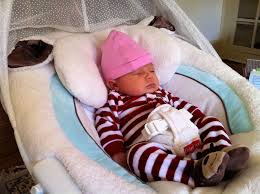
Some doctors once thought that sleeping on the side might be a reasonable alternative to back positioning, but recent evidence has shown that side sleeping also should be avoided for safety reasons. (Please note that there are a few exceptions to this recommendation, including babies with certain medical conditions, which your pediatrician can discuss with you.) This recommendation of putting the baby down on her back applies to infants throughout the first year of life. However, it is particularly important during the first six months, when the incidence of SIDS is the highest. Even when you are sure your baby is lying on her back when going to sleep, it is also important to avoid placing her on soft, porous surfaces such as pillows, quilts, comforters, sheepskins, or bean bags—even soft materials used for stuffed toys—which may block her airway if she burrows her face in them. Also avoid having her sleep on waterbeds, sofas, or soft mattresses. A firm crib mattress covered by a sheet is the safest bedding.

However, if your baby doesn’t want the pacifier or if it falls out of her mouth, don’t force it. If you are breastfeeding, wait until breastfeeding is well established, usually around three or four weeks of age, before using a pacifier.
mattress for rv canadaWhile sleeping on the back is important, your baby also should spend some time on her stomach when she is awake and being observed.
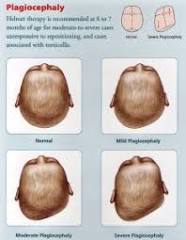
cheap air mattress vancouverThis will help to develop her shoulder muscles and her head control, and avoid the development of flat spots on the back of her head. As she gets older and her stomach grows, your baby will be able to go longer between feedings. In fact, you’ll be encouraged to know that more than 90 percent of babies sleep through the night (six to eight hours without waking) by three months. Most infants are able to last this long between feedings when they reach 12 or 13 pounds (5.44–5.89 kg), so if yours is a very large baby, she may begin sleeping through the night even earlier than three months.

As encouraging as this sounds, don’t expect the sleep struggle to end all at once. Most children swing back and forth, sleeping beautifully for a few weeks, or even months, then returning abruptly to a late-night wake-up schedule. This may have to do with growth spurts increasing the need for food, or, later, it may be related to teething or developmental changes. From time to time, you will need to help your baby fall asleep or go back to sleep. Especially as a newborn, she probably will doze off most easily if given gentle continuous stimulation. Some infants are helped by rocking, walking, patting on the back, or by a pacifier in the mouth. For others, music from a radio or a CD player can be very soothing if played at moderate volume. Certain stimulation, however, is irritating to any baby—for example, ringing telephones, barking dogs, and roaring vacuum cleaners. There is no reason to restrict your baby’s sleeping to her crib. If, for any reason, you want her closer to you while she sleeps, use her bassinet as a temporary crib and move it around the house with you.

Based on an evaluation of current sudden infant death syndrome (SIDS) data, the American Academy of Pediatrics recommends that healthy infants, when being put down to sleep, be placed on their backs. Despite common beliefs, there is no evidence that choking is more frequent among infants lying on their backs (the supine position) when compared to other positions, nor is there evidence that sleeping on the back is harmful to healthy babies. In some circumstances, there are still good reasons for placing certain infants on their stomachs for sleep. Discuss your individual circumstances with your pediatrician. Since 1992, when the American Academy of Pediatrics began recommending this sleep position the annual SIDS rate has declined more than 50 percent.Step 1: Buy baby swing. Step 2: Assemble swing.Put baby in swing. Step 4: Turn swing on. What, it’s not working for you? But My Baby Hates the Swing I have never failed to get a baby to fall asleep. Contrary to what you may have heard, I do not do this by reading my blog posts to babies.

I use baby swings. Most of you live too far away for me to show you in person how I get babies to fall asleep in baby swings so I’m going to do my best to describe my no-fail baby swing sleep technique here. If you have a newborn baby (0-6 months old) and are struggling with sleep, short naps, etc. I would give the swing a try. Start with the basic baby swing steps: Run it by your pediatrician. I’ve found they almost unilaterally will support your decision. But best to make sure first. Put the swing where your baby currently sleeps (or sleeps most often). This is probably in your own room and it’s OK if it’s not currently THEIR room (we can easily move in that direction once we’ve mastered the swing). This is our new “sleep spot” and for the next few weeks, the baby should generally sleep in that location, in the swing, round the clock. (It’s OK if a few car/stroller naps sneak in there, it happens.) Make your sleep spot a dark place. Room darkening blinds work great for this.
However you can temporarily create a dark space by simply taping aluminum foil to the windows with masking tape. Sure it’s a little ghetto but it works great! Put something in there that will create loud and continuous white noise. White noise will help your baby sleep and (assuming the sleep spot is YOUR room) will also help block the sound of the swing so YOU can sleep. Set up your baby monitor. Move whatever other sleep supplies (swaddling blankets, pacifiers, books, chair for nursing/feeding, etc.) you need so that it’s relatively close to your new baby sleep spot. Put your swing into the sleep spot. Use your swing on the highest speed setting available. For newborns, faster is better. Put the baby in the swing, strap them in, turn it on, and voilà – baby sleep nirvana! For some babies, it may be just this simple. If so, congratulations and I hope you are currently enjoying your victory nap. In fact everybody should try to put your baby awake into the swing, turn it on, and walk out of the room.

Wait a few minutes (literally – use a timer and don’t go back for 3-5 minutes) and see what happens. Your baby may surprise you.In which case we move on to what I like to call the Varsity Sleep Swing technique. We’re going to slather your baby with so much soothing that they will literally be incapable of staying awake. It’s like when I have 2 glasses of wine and then try to watch Masterpiece Theater, only modified for the younger set. Varsity Sleep Swing Technique All of the above PLUS:Remember swaddling is all about the arms, having the legs wrapped up doesn’t add anything. So it’s totally fine to leave the legs loose so you can safely strap your baby into the swing with swaddled arms. Put something that smells like Mom near baby’s face. Like that t-shirt you’ve been living in for the past month because you’re too tired to deal with laundry. Cut off a small piece (~6″X6″ nothing large enough to become an entrapment hazard) and put it in the back of the swing near the baby’s face.

When not being used for naps/sleeping keep this little piece of t-shirt tucked into your bra during the day so it always smells like you/milk.Some babies don’t take to pacifiers but if yours does then by all means use it. Jiggle their head.* Put your swaddled pacifier sucking baby in the swing in the dark room with the white noise. Crouch down behind the swing so they can’t really see you. Push the swing with your arm (the motor is off for now). If your baby is not calming or falling asleep, jiggle the back of the swing left and right WHILE you are swinging it back and forth. The goal here is to have your baby’s cheeks wiggling like a bowl of jello. (Here is a good video example of baby jiggling). You can also shoosh loudly (I know you are rocking the white noise already but for some reason the added shooshing seems to help). Keep it up for 2-3 minutes or until your baby starts to look tired. A great visual cue to look for is the sleepy blink – your baby starts to blink more slowly as though their eyelids are getting heavier.

When you start to see sleepy cues turn on the swing motor. (Optional): Nurse baby to sleep while swaddled THEN put them in the swing. NOTE: This is fine to do for younger babies (<4 months) or if you’re struggling to get them to fall asleep any other way. My advice is to play around with other methods to help them fall asleep IN the swing but this is a valid fallback tactic to use in the short run.This is what it sounds like – a jiggle. Shaken baby syndrome is an act of violence that requires forceful slamming motion. It is almost impossible to achieve this level of stress with a baby cradled in a swing but I want to be very clear that we are talking about jiggling vs. violent shaking. Note: Your baby may be crying/complaining while you are swaddling her and strapping her into the swing. This probably means she’s a bit overtired – she may be short on sleep in general or maybe she was just kept awake a little longer than she could handle. Unless she is hungry this is a really good sign that she needs sleep so take a deep breath and continue to help her fall asleep in the swing.

Short-Term Sleep Swing Goals I know some of you will feel like the swing is a detour because what you REALLY want is that peanut sleeping in his own crib. But the swing is going to solve two critical short-term issues: Increase the Total Amount of Sleep Babies sleep better and longer while moving. There is a reason most babies fall asleep seconds after you start the car. In general, babies will take slightly longer naps (+20-40 minutes) in a swing and newborns who are waking up a lot at night (4+ times) will often drop one of their night feedings after being put to bed in a swing.2 Help Baby Learn to Fall Asleep. Like potty training, getting the straw into the juicebox, and spitting, falling-asleep is a skill that you will need to help your child develop. Early on we help babies fall asleep primarily by rocking and nursing. However as your baby gets older these techniques will start to fail you (I’ll be writing a bunch about this later). If your goal is help your baby become a happy toddler who is capable of sleeping through the night then at some point you will have to help her learn to fall asleep.

This can be a real challenge to do without any crying. Unless you use the swing in which case it’s really really easy. Long-Term Sleep Swing Strategy As your baby gets closer to 6+ months of age you want to gradually wean off the swaddling, pacifier, and swinging. To wean off the swing, simply start turning the speed down. If naps & night sleep remains the same then continue. If she starts waking up more often, she’s not ready and the speed needs to stay up where it was. Wait a week or two, then try again. There is no rush. When you’re ready, move the swing next to the crib so that baby gets used to sleeping in that location. Eventually you’ll find yourself putting baby down for naps/bedtime in a non-moving swing. When you get to this point, the transition to the crib is relatively painless. The first time you put your baby in the crib there may be some “hey this is new?!?” complaining but it is generally mild and ends quickly. If your baby was happily sleeping in a non-moving swing, they SHOULD sleep just as happily in the crib.